- About
- Learn
- Outreach
- Get Involved

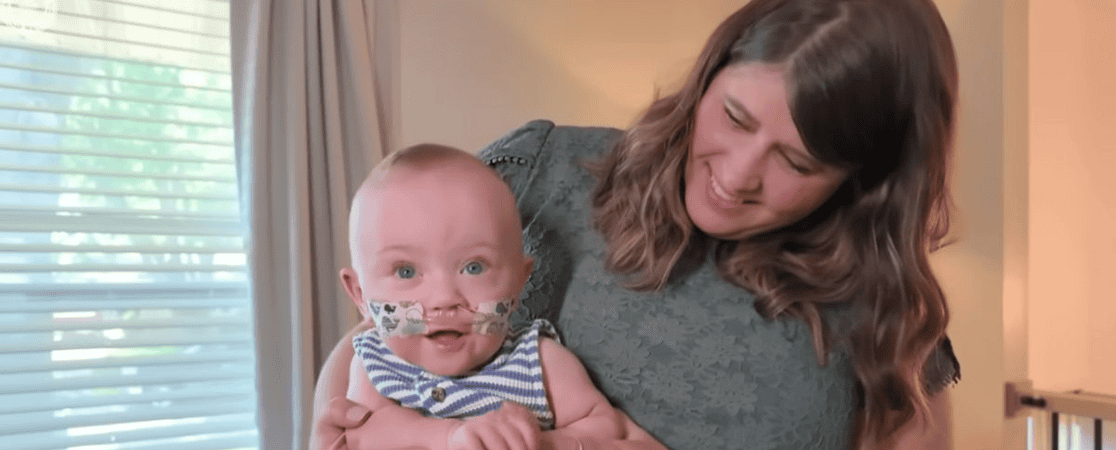
Baby Nash turned one last week! Born at just 21 weeks, during the second trimester, and weighing only 10 ounces (about the size of a carrot!) he holds the Guinness World Record as the youngest premature baby to survive.
By 6 weeks after fertilization, all of Nash’s vital organs were already present, though still developing. At 21 weeks, these organs needed more time to mature before they could fully support him outside the womb. Nash spent 6 months in the NICU, and thanks to modern medical technology and dedicated care, he’s now thriving.
I’m not sure if you know this, but when Roe v. Wade was decided, it outlined a “trimester system” where viability, the point when a baby could survive outside the womb, was drawn at 28 weeks. This system was not based on medical science but was invented by Justice Harry Blackmun in Roe v. Wade as an arbitrary legal framework.
Today, babies like Nash are proof that viability is not a fixed measure. As technology advances, we can now save children born as early as 21 weeks and in the near future, that number may be even lower!
Many pro-choice advocates still cling to viability as a standard for legal abortion. But what does viability really mean?
If viability is merely the ability to survive on one’s own then babies like Nash are still not viable when they’re born, because they require medical assistance to remain alive. This definition of viability, to be completely free of dependence on medical technology, does not only exclude the very young from our definition of “valuable person,” but many people who depend on medical interventions, such as diabetics who need insulin, patients with pacemakers, or those requiring feeding tubes or oxygen. Human value can not and should not depend on independence from life sustaining help.
Some argue that viability is about the ability to survive without dependence on another person’s body. But by that logic, babies in parts of the world where formula is unavailable would not be “viable” until they could survive without breast milk, often close to one year old. This definition would even exclude conjoined twins who rely on one another’s body for survival. True value and dignity are not determined by independence but by the inherent worth of every human life.
That’s why, across Louisiana, Life Chains are held to advocate for unborn babies like Nash, who cannot speak for themselves. By standing in a Life Chain this October, you can be a voice for moms and babies, showing our communities that every life, including those who are dependent, are worth protecting.
STAND FOR BABIES LIKE NASH AT A LIFE CHAIN
Nash’s story is a beautiful reminder that life is valuable at every stage. Medical technology will continue to advance, but our worth as human beings does not depend on the ability to live unaided or on the timing of birth. From fertilization to natural death, every human being has dignity and deserves protection.