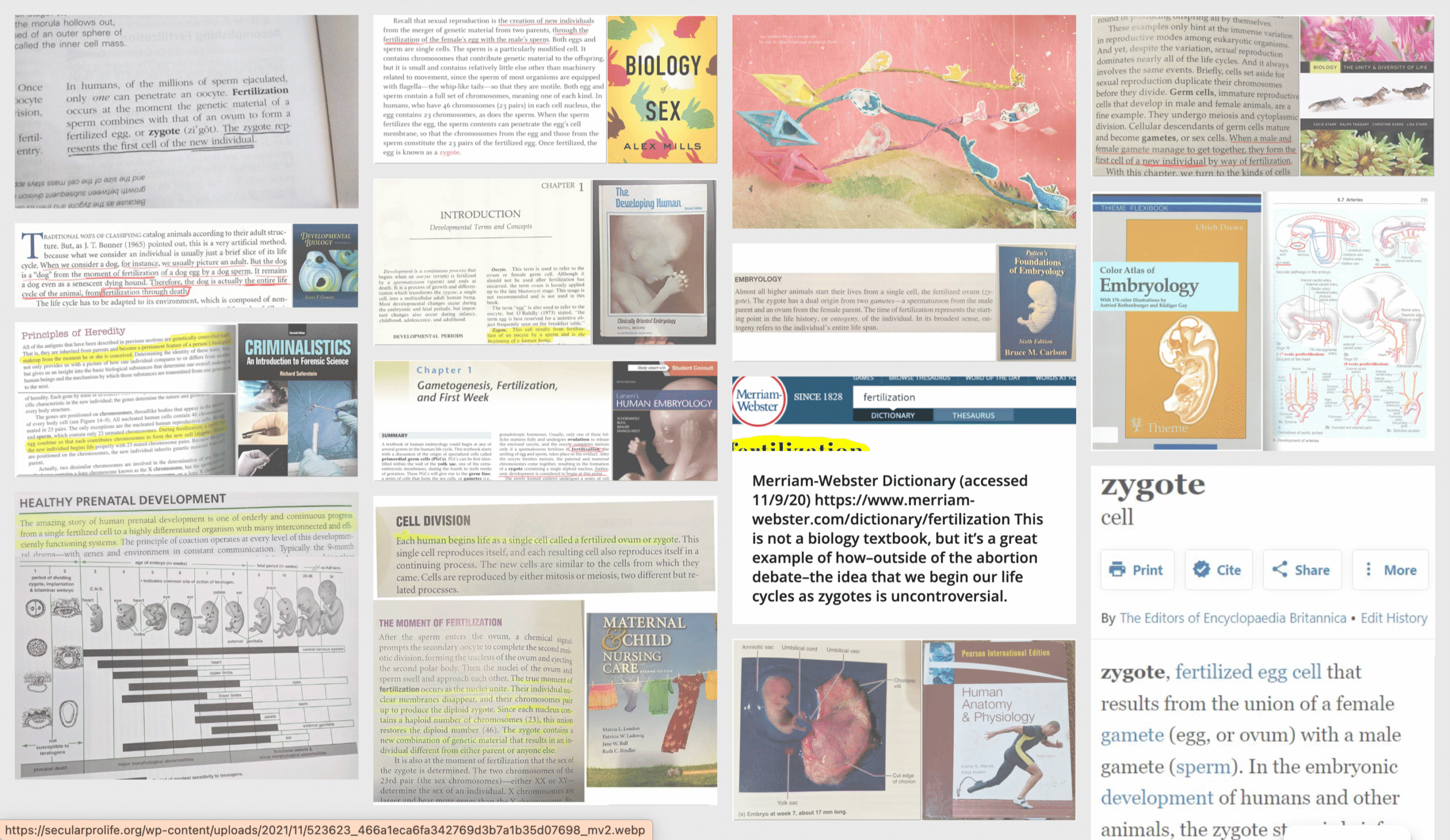
The scientific consensus is clear: fertilization is the start of life for a new human organism.
We know the unborn is alive because from the single cell stage of the zygote they display the characteristics of life. They metabolize food for energy, react to stimuli, and grow through cellular reproduction.
Sperm and eggs are also alive, so how is the zygote different?
Sperm and egg cells are alive, but they’re not organisms. They are parts of a larger organism, not whole organisms themselves. Organisms function for the good of the whole, with their various systems working to maintain the whole. From fertilization, the unborn have their own set of unique DNA and are developing their own systems from within. It is not the mother’s body that is building the baby, but the baby who is developing his or her own body through nutrition and proper environment supplied by the mother’s body.
The law of biogenesis states that living things reproduce after their own kind. In other words, 2 cats will never produce a zebra, it will always be another cat. Through human reproduction, the result will always be another human.
From the single cell zygote stage, the unborn is a human being.